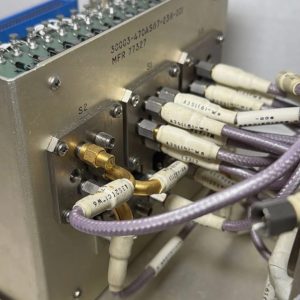
The Aviation Switching Module – NSN 4920-01-250-2696 (AS-IS / Untested) is a specialized aerospace electrical component offered for professional evaluation, restoration, testing, parts recovery, collection, or another suitable non-assumed application.
An Aircraft Switching Module and Aerospace Switching Module should be treated as specialized equipment rather than universal components that can be connected to any aircraft electrical system.
An Aircraft Electrical Switching Module can have commercial value for technicians, while an Aviation Electrical Control Module or Aerospace Electrical Control Unit requires qualified bench evaluation before operational consideration.
An Aircraft Switching Unit can support specialized signal or circuit management, but an Aerospace Power Distribution Module or Aviation Power Control Module may use different internal architecture and electrical requirements.
Key Details of the Untested Switching Module
The National Stock Number provides an important catalog reference that can help buyers research the item’s supply history, technical identity, related part numbers, and possible equipment application.
Military or aviation-surplus components may Aerospace Switching Unit carry replacement numbers, superseded numbers, modification markings, or contract identifiers that assist research.
AS-IS Aerospace Equipment Considerations
Transparent AS-IS terms help specialists evaluate price and risk realistically.
An untested component should not be connected directly to aircraft wiring, expensive test equipment, batteries, laboratory supplies, or unknown power sources.
Aviation Switching Hardware Uses
The product page should avoid assigning a cockpit, power-distribution, test-set, or mission-system function without evidence.
Missing knobs, guards, labels, connectors, covers, or fasteners may reduce completeness.
Maintaining a Switching Module Assembly
Careful exterior evaluation can reveal evidence of previous use or damage before the unit is opened.
Proper connector protection preserves the Aerospace Switching Module for future testing or restoration.
Evaluating Aircraft Electrical Components
A burnt odor, melted material, soot, or arcing marks should be disclosed clearly.
Seals, labels, inspection marks, tamper indicators, and original component arrangements may have historical or technical value.
Choosing an Aviation Electrical Control Module
Similar-looking modules may use completely different pin assignments and operating voltages.
Missing labels or faded markings can make operation difficult and may increase the risk of improper testing.
Aircraft Power Switching Module Considerations
Power switching equipment can create heat, arcing, or equipment damage when connected incorrectly.
Accurate reporting protects buyers seeking an Aircraft Power Switching Module for repair, parts, or research.
Electrical Control Unit Restoration
Visual inspection, continuity checks, insulation review, component identification, and controlled testing may form part of a professional evaluation.
Every repair should be photographed and recorded if the module is restored.
Choosing an Aircraft Signal Switching Module
Signal circuits can be sensitive to grounding, shielding, contact resistance, connector condition, and electromagnetic interference.
Missing or corroded bonding components may affect noise, interference, or reliability.
Professional Aviation Module Evaluation
A module removed from its original system can be difficult to test without supporting equipment and documentation.
Compatibility should be verified through NSN, part number, manufacturer, connector layout, revision level, modification status, and equipment application.
Restoring Aviation Switching Hardware
Its value depends on identity, completeness, cosmetic condition, connector integrity, internal status, rarity, and availability of documentation.
Removable demonstration leads or external training fixtures may preserve originality better than permanent alteration.
Power Distribution Module Inspection
A module should not be loaded electrically until contact condition, insulation, wiring, and circuit configuration are understood.
Mounting points should be inspected because secure installation can affect grounding, cooling, vibration resistance, and connector alignment.
Aircraft Module Functional Evaluation
Documented condition improves confidence among buyers of legacy Aircraft Electrical Control Unit equipment.
Unknown circuits should not receive voltage simply because a connector pin appears to be a power input.
Aviation Electrical Power Management
Responsible product information protects buyers seeking an Aviation Power Control Module.
Technicians should inspect for capacitors, transformers, relays, damaged insulation, or hazardous residues before opening or testing the unit.
Maintaining Aerospace Switching Equipment
An Aircraft Electronic Switching System may consist of multiple modules, harnesses, control panels, relays, indicators, power sources, and associated equipment.
Professional analysis supports responsible Aircraft Electronic Switching System maintenance.
Protecting an Aerospace Switching Unit
Desiccant or moisture-control materials should not contact electrical components directly unless appropriate.
Shipping should use cushioning that supports the enclosure while protecting protruding switches, connectors, controls, labels, and mounting points.
Aircraft Electrical Module Buying Considerations
Commercial evaluation should focus on total project suitability rather than the purchase price alone.
Unknown information should remain clearly identified as unknown.
Inspecting the Aviation Switching Module Before Purchase
A pre-purchase review should confirm the NSN, manufacturer, part number, serial number, markings, enclosure condition, connectors, switches, included accessories, storage history, modification status, and known application.
- Resolve identity, configuration, application, and package-completeness questions before payment.
- Do not interpret clean appearance, smooth switch movement, or intact labels as proof of electrical operation.
- Confirm the written invoice, AS-IS terms, payment protection, packaging method, shipping insurance, inspection period, and return conditions.
Professional Bench Evaluation
A methodical process reduces the risk of damaging rare aviation equipment.
Powered testing should proceed gradually while monitoring current, temperature, smell, noise, indicators, and unexpected behavior.
Aircraft Electrical Module Repair Planning
Original labels, wiring routes, fasteners, finishes, and component locations should be preserved whenever practical.
Every repair should record the date, technician, fault found, parts replaced, measurements, testing performed, and remaining limitations.
Choosing the Aviation Switching Module – NSN 4920-01-250-2696 (AS-IS / Untested)
The Aviation Switching Module – NSN 4920-01-250-2696 (AS-IS / Untested) can provide restoration, research, parts, training, collection, or professional evaluation value when its identity and condition are understood clearly.
Careful technical and commercial evaluation can reduce equipment damage, incompatible purchases, missing-accessory costs, testing hazards, and restoration delays.
Whether the product is described as an Aircraft Switching Unit, Aerospace Power Distribution Module, Aircraft Electrical Control Unit, or Aviation Power Control Module, AS-IS limitations should remain clear.
With complete evaluation and continued care, the Aviation Switching Module – NSN 4920-01-250-2696 (AS-IS / Untested) can deliver a professional combination of restoration potential, component value, technical interest, and aerospace-equipment relevance.